The New Inverted Food Pyramid
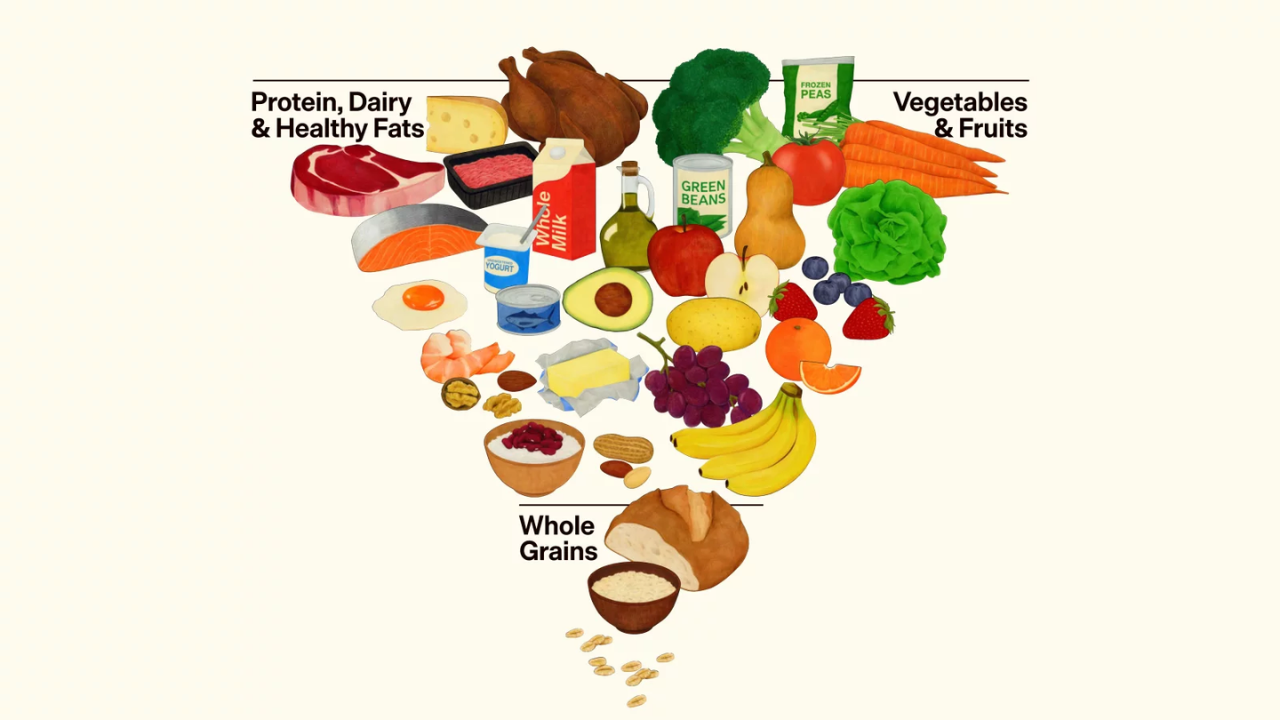
The U.S. government has unveiled a new food pyramid that stresses protein and whole foods and calls for an end to "the war on saturated fats."
U.S. Department of Agriculture/U.S. Department of Health and Human Services
New dietary guidelines have been announced by Health Secretary Robert F, Kennedy Jr, essentially inverting the old pyramid. Promoting whole foods, protein, and fats, while calling out the dangers of highly processed foods “laden with refined carbohydrates, added sugars, …unhealthy fats, and chemical additives.” This inversion has long been overdue. The old pyramid, placing a massive emphasis on bread, cereal, and grains, made all of us in the healthy industry want to bonk ourselves in the head.
While following these guidelines may help the general unhealthy populace, keep in mind that these are only guidelines. For example, one of the bullet points is “Eat the right amount.” Think of the guidelines as the furthest edge on a bowling alley before you fall into the gutter.
One of the best benefits of the new guidelines is that putting real foods back at the center of health will positively impact our schools and our military.
Here are things to keep in mind about the new pyramid:
Prioritize protein at every meal. This does not have to be animal protein.
There is an emphasis on full-fat milk with no added sugars. Full-fat milk may not be right for your body, causing gut distress. The emphasis here should be “no added sugars.”
Eat vegetables and fruits throughout the day, focusing on whole forms (Doesn’t mean you have to eat a raw vegetable, but spaghetti sauce does not count as “tomatoes,” and “strawberry jam” does not count as fruit)
Incorporate healthy fats from whole foods such as meats, seafood, eggs, nuts, seeds, olives, and avocados —portion size can often look like 1 tbsp of almond butter, 50-60g of avocado, or 22 almonds. Incorporating healthy fats does not mean loading your salad with olives or drizzling avocado oil on everything.
Focus on whole grains while sharply reducing refined carbohydrates. More rice, less pasta. More oats, less cereal.
Limit highly processed foods, added sugars, and artificial additives. Be careful about even “healthy” processed foods like granola, which can have artificial additives or “natural flavors” (which doesn’t mean anything), and tons of sugar.
Eat the right amount for you, based on age, sex, size, and activity level
Choose water and unsweetened beverages to support hydration. They failed to mention the elimination of diet sodas. Stick with water and quality electrolytes like Thorne Electrolytes.
Limit alcohol consumption for better overall health. Again…think bumper rails in a bowling alley. Down the center for your solid strike, the guideline should have read: “Eliminate alcohol consumption for better overall health.” Check out Dr Casey Means’ book Good Energy or a cheeky read by Holly Whitaker, Quit Like a Woman: The Radical Choice to Not Drink in a Culture Obsessed with Alcohol.
Read the new, easy-to-follow, 10-page guidelines here, or check out their modern, yet annoying, realfood.gov website.